
Article Plan: Emotional Intelligence ౼ Daniel Goleman PDF
This article comprehensively explores Daniel Goleman’s groundbreaking work on emotional intelligence, detailing its core concepts, model, and practical applications, alongside PDF resource access.
We’ll navigate legitimate download sources, cautioning against risks associated with unofficial files, referencing Goleman’s influential book and related academic research.
The exploration will cover workplace dynamics, personal relationships, and leadership, providing insights into Goleman’s subsequent publications and the enduring impact of his theories.
Daniel Goleman’s “Emotional Intelligence” revolutionized understanding of human capabilities, shifting focus beyond IQ to encompass self-awareness, empathy, and social skills – a pivotal concept.
His work, widely available as a PDF, challenged traditional notions of success, emphasizing the crucial role of emotional competencies in both personal and professional realms.
Goleman’s model provides a framework for developing these skills, impacting fields from leadership to interpersonal relationships, making his insights exceptionally valuable today.
The Rise of Emotional Intelligence
Before Daniel Goleman’s 1995 publication, the concept of emotional intelligence (EI) existed primarily within academic psychology, largely unnoticed by the broader public. Goleman’s accessible writing and compelling arguments brought EI into mainstream consciousness, sparking widespread interest and debate.
The book’s success coincided with a growing dissatisfaction with solely relying on IQ as a predictor of success. Individuals with high IQs weren’t necessarily thriving in life, leading to a search for other contributing factors. Goleman’s work offered a powerful explanation, highlighting the importance of managing one’s emotions and understanding others.
The availability of “Emotional Intelligence” in PDF format further fueled its dissemination, allowing for wider access to Goleman’s ideas. This accessibility contributed significantly to the rapid rise of EI as a key concept in personal development, leadership training, and organizational psychology. The book’s impact continues to resonate today, shaping how we understand and cultivate emotional skills.

Why Goleman’s Work is Significant
Daniel Goleman’s “Emotional Intelligence” revolutionized our understanding of success, challenging the long-held belief that IQ is the sole determinant of achievement. He demonstrated that EI – the ability to perceive, understand, manage, and utilize emotions – is often a more powerful predictor of performance in various life domains.
The significance lies in its practical applications; Goleman’s model provides a framework for developing emotional skills, leading to improved relationships, enhanced leadership, and increased well-being. The widespread availability of the book in PDF format democratized access to these insights.

Furthermore, Goleman’s work bridged the gap between neuroscience and psychology, explaining the brain mechanisms underlying emotional processing. This scientific grounding lent credibility to the concept of EI, solidifying its place in both academic and popular discourse, and continues to influence research today.

Core Concepts of Emotional Intelligence
Goleman’s framework defines EI as recognizing emotions in oneself and others, utilizing this awareness to guide thinking and behavior, and fostering effective interactions.
Defining Emotional Intelligence (EI)
Emotional Intelligence (EI), as popularized by Daniel Goleman, represents a significant departure from traditional notions of intelligence focused solely on IQ. Goleman argues that EI involves the capacity to be aware of, understand, and manage one’s own emotions, as well as recognizing and influencing the emotions of others.
This isn’t about being “soft” or overly sensitive; rather, it’s about possessing a crucial skillset for navigating complex social situations and achieving personal and professional success. The core idea, detailed in his seminal work, Emotional Intelligence, is that emotional awareness is a key predictor of life outcomes.
EI encompasses abilities like self-awareness, self-regulation, motivation, empathy, and social skills, all working in concert to shape how we interact with the world. It’s a learned capability, meaning it can be developed and improved over time, unlike IQ, which is largely fixed.
The Five Components of EI
Daniel Goleman’s model of Emotional Intelligence identifies five key components, each contributing uniquely to overall EI proficiency. Self-awareness forms the foundation, involving a deep understanding of one’s own emotions, strengths, and weaknesses. Self-regulation builds upon this, enabling control over impulsive feelings and behaviors.
Motivation, the third component, drives internal goals and resilience, pushing individuals towards achievement. Crucially, empathy allows for understanding and sharing the feelings of others, fostering stronger relationships. Finally, social skills encompass adeptness in managing interactions and building rapport.

These aren’t isolated traits; they interact dynamically. Goleman’s work, readily available in PDF format, emphasizes that developing these five areas leads to enhanced personal effectiveness and improved interpersonal dynamics.
Self-Awareness
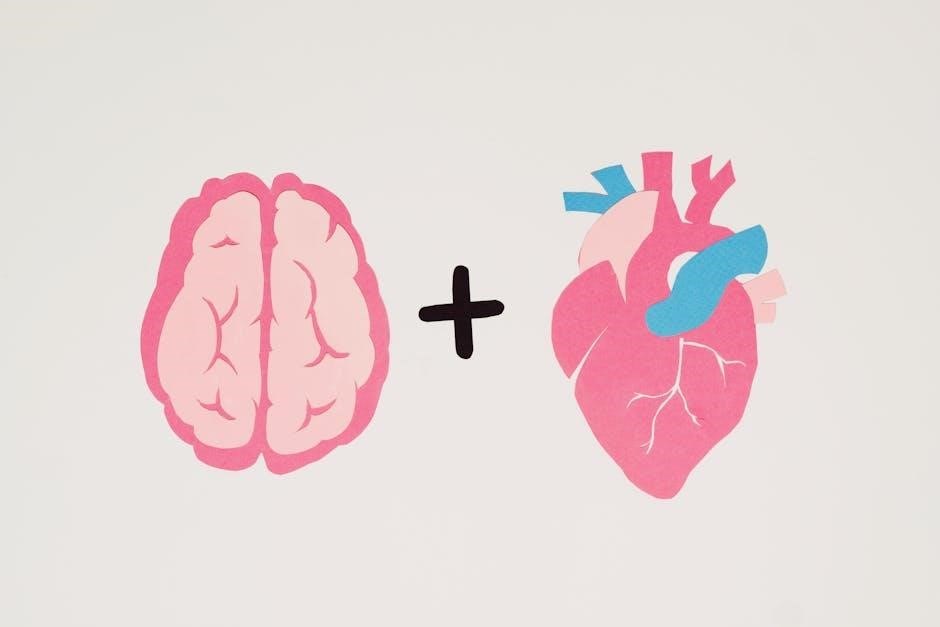
Self-awareness, as defined by Daniel Goleman, is the cornerstone of Emotional Intelligence, representing the ability to recognize and understand your own emotions, moods, and drives, as well as their effect on others. This isn’t simply knowing what you feel, but why you feel it.
Goleman’s research, detailed in his widely available PDF, highlights that self-aware individuals possess a realistic self-assessment, recognizing both strengths and weaknesses. They exhibit humility and confidence, understanding how their emotions impact performance.
Developing self-awareness involves introspection and honest self-reflection. It’s about recognizing emotional patterns and triggers, allowing for proactive management. A strong grasp of self-awareness, as outlined in Goleman’s work, is fundamental for personal growth and effective leadership.
Self-Regulation
Self-regulation, a crucial component of Daniel Goleman’s Emotional Intelligence model, detailed in his accessible PDF resources, refers to the ability to control or redirect disruptive impulses and moods. It’s about thinking before acting and managing emotional reactions constructively.
Goleman emphasizes that self-regulation isn’t about suppressing emotions, but rather processing them in a healthy way. Individuals with strong self-regulation demonstrate trustworthiness and integrity, exhibiting composure even under pressure.
This skill involves taking responsibility for one’s actions and adapting to changing circumstances. The PDF versions of Goleman’s work often include practical techniques for improving self-regulation, such as mindfulness and emotional labeling, fostering a more balanced and controlled emotional state.
Motivation
Daniel Goleman’s exploration of motivation within Emotional Intelligence, readily available in PDF format, distinguishes it from simply being driven by external rewards. He posits that true motivation stems from a passion for work itself, a deep-seated enjoyment and drive to achieve.
This intrinsic motivation is characterized by a relentless pursuit of goals, even in the face of setbacks. Goleman’s work highlights that emotionally intelligent individuals are optimistic and committed, taking initiative and striving for excellence.
The PDF resources emphasize that this isn’t about unrealistic positivity, but a resilient spirit and a belief in one’s ability to succeed. Understanding this facet of EI, as outlined by Goleman, is key to unlocking personal and professional fulfillment.
Empathy
According to Daniel Goleman’s “Emotional Intelligence,” accessible in PDF versions, empathy is far more than simply understanding another’s feelings. It’s the ability to step into their shoes, to truly feel with them, and recognize their emotional state.
Goleman’s research, detailed in downloadable resources, reveals that empathy fosters stronger relationships, both personally and professionally. It allows for better communication, conflict resolution, and collaboration.
The PDF materials highlight that empathetic individuals are attuned to nonverbal cues, understanding unspoken emotions and responding with sensitivity. This isn’t about agreeing with others, but about acknowledging and validating their experiences, a crucial skill Goleman champions.
Social Skills
Daniel Goleman’s “Emotional Intelligence” PDF emphasizes that social skills represent the culmination of the other four components – self-awareness, self-regulation, motivation, and empathy. They are the practical application of EI in interactions.
These skills, detailed in downloadable versions of Goleman’s work, encompass a wide range of behaviors, including active listening, clear communication, persuasion, and conflict management. They’re about building rapport and navigating social complexities effectively.
The PDF resources illustrate that individuals with strong social skills are adept at building networks, leading teams, and fostering positive relationships. Goleman argues these skills are paramount for success, often outweighing IQ in achieving personal and professional goals.
Goleman’s Emotional Intelligence Model
Goleman’s model, detailed in his “Emotional Intelligence” PDF, posits that EI isn’t a single ability, but a constellation of skills impacting how we perceive and manage emotions.
The Brain and Emotional Intelligence
Daniel Goleman’s work intricately links emotional intelligence to specific brain structures. He highlights the amygdala’s role in processing emotions, particularly fear, and its quick, often unconscious, reactions. The prefrontal cortex, conversely, provides rational thought and emotional regulation, allowing for considered responses.
Goleman explains that emotional intelligence isn’t about suppressing feelings, but about the interplay between these brain regions. A strong connection allows for emotional awareness and control. The “emotional hijacking” phenomenon, described in his PDF, occurs when the amygdala overwhelms the prefrontal cortex, leading to impulsive behavior.
Neuroplasticity, the brain’s ability to reorganize itself, is crucial; EI skills can be developed and strengthened through practice, physically altering neural pathways. Understanding this neurological basis, as presented in his work, is fundamental to improving emotional competence.
Emotional Intelligence vs; IQ
Daniel Goleman’s Emotional Intelligence challenged the long-held belief that IQ was the primary determinant of success. While acknowledging IQ’s importance, he argues that EI often plays a more significant role, particularly in navigating complex social and emotional landscapes.
His research, detailed in the PDF version of his book, demonstrates that individuals with high EI are better equipped to manage stress, build relationships, and achieve their goals. IQ predicts academic performance, but EI predicts life outcomes – career success, leadership effectiveness, and personal well-being.
Goleman posits that EI comprises skills that can be learned and improved, unlike IQ, which is largely fixed. This offers a more optimistic view of human potential, suggesting that emotional competence is attainable through conscious effort and self-awareness.

Accessing Daniel Goleman’s “Emotional Intelligence” in PDF Format
Locating a PDF copy requires careful navigation, prioritizing legitimate sources to ensure authenticity and avoid potential malware risks associated with unofficial downloads.
Legitimate Sources for PDF Downloads
Finding a trustworthy PDF of Daniel Goleman’s “Emotional Intelligence” necessitates utilizing reputable platforms. While a free, legal download directly from Goleman’s website isn’t readily available, several avenues offer access.
Major online booksellers, such as Amazon, Barnes & Noble, and Google Play Books, frequently sell the eBook version in PDF format. Academic databases like JSTOR or university library systems may provide access for students and researchers.
Bantam Books, the original publisher, might offer the PDF through their channels. Checking legitimate eBook subscription services like Scribd or Perlego could also yield results. Always verify the source’s security and ensure it’s a licensed distributor to avoid copyright infringement and potential malware;
Remember to prioritize purchasing the PDF to support the author and publisher.
Potential Risks of Unofficial Downloads
Downloading “Emotional Intelligence” by Daniel Goleman from unofficial sources carries significant risks. Websites offering free PDF downloads often host malware, viruses, and spyware, compromising your device’s security and personal data;
These downloads frequently violate copyright laws, potentially leading to legal repercussions for the user. The quality of the PDF itself can be poor, with missing pages, formatting errors, or incomplete content. Furthermore, these sites often employ deceptive advertising and pop-ups, creating a frustrating and potentially harmful browsing experience.
Supporting authors and publishers by purchasing legitimate copies ensures continued creation of valuable content. Prioritizing secure, legal sources protects your digital wellbeing and upholds ethical practices. Avoid the temptation of free, unauthorized downloads to safeguard your device and respect intellectual property.

Applications of Emotional Intelligence
Goleman’s EI principles profoundly impact various life facets, enhancing workplace performance, strengthening interpersonal bonds, and fostering effective leadership through self-awareness and empathy.
Emotional Intelligence in the Workplace
Daniel Goleman’s research reveals a strong correlation between emotional intelligence and workplace success. Individuals with high EI demonstrate superior performance, particularly in roles requiring collaboration, communication, and conflict resolution.
EI fosters a positive work environment, boosting team morale and productivity by enabling employees to understand and manage their own emotions, as well as those of their colleagues.
Leaders with high EI inspire trust and loyalty, effectively motivating their teams and navigating complex organizational challenges. The ability to empathize, build rapport, and provide constructive feedback are crucial leadership skills rooted in emotional intelligence.
Furthermore, understanding emotional cues allows for better decision-making and problem-solving, minimizing workplace stress and promoting a healthier, more engaged workforce. Goleman’s model provides a framework for developing these vital skills.

Emotional Intelligence in Personal Relationships
Daniel Goleman’s work highlights the pivotal role of emotional intelligence in fostering healthy and fulfilling personal relationships. The capacity for self-awareness allows individuals to understand their own emotional needs and communicate them effectively to partners, family, and friends.
Empathy, a core component of EI, enables deeper connection and understanding, facilitating compassionate responses to others’ emotions and strengthening bonds.
Self-regulation is crucial for managing conflict constructively, preventing impulsive reactions and promoting respectful dialogue. Individuals with high EI are better equipped to navigate challenging conversations and resolve disagreements without damaging relationships.
Ultimately, emotional intelligence cultivates trust, intimacy, and mutual respect, leading to more satisfying and enduring connections. Goleman’s insights offer valuable tools for enhancing relational well-being.
Emotional Intelligence and Leadership
Daniel Goleman’s research demonstrates a strong correlation between emotional intelligence and effective leadership. Traditional leadership qualities, like IQ and technical skills, are insufficient without the ability to understand and manage emotions – both one’s own and those of others.
Leaders with high EI inspire trust, motivate teams, and navigate complex organizational dynamics with greater success. Self-awareness allows for authentic leadership, while self-regulation prevents impulsive decisions and fosters stability.
Empathy enables leaders to connect with their team members on a deeper level, understanding their needs and fostering a supportive work environment. Strong social skills facilitate effective communication and collaboration.
Goleman’s model suggests that EI is a critical differentiator for exceptional leadership, driving performance and fostering a positive organizational culture.

Further Resources & Related Works
Explore Goleman’s later works like “Social Intelligence” and numerous academic papers investigating emotional intelligence’s impact, expanding upon the foundational concepts from his PDF.
Goleman’s Subsequent Books
Following the monumental success of “Emotional Intelligence,” Daniel Goleman continued to delve deeper into the realm of human capabilities, publishing several influential books that expanded upon his initial framework. “Social Intelligence: The New Science of Human Relationships” (2006) explored how our ability to understand and navigate social cues profoundly impacts personal and professional success.
He further investigated the application of emotional and social intelligence in leadership with “Leadership: The Power of Emotional Intelligence” (2002), offering practical strategies for cultivating these skills in oneself and others. Goleman also co-authored “Primal Leadership: Unleashing the Power of Emotional Intelligence” (2002) with Richard Boyatzis and Annie McKee, focusing on the link between emotional intelligence and effective leadership styles.
These subsequent publications demonstrate Goleman’s commitment to translating research into actionable insights, providing readers with tools to enhance their emotional awareness, build stronger relationships, and achieve greater fulfillment – all building upon the core principles outlined in his seminal “Emotional Intelligence” PDF.
Academic Papers & Research on EI
Daniel Goleman’s work sparked a surge in academic research validating and expanding upon the concept of emotional intelligence. Numerous studies have investigated the neurological basis of EI, utilizing brain imaging techniques to demonstrate the distinct neural pathways involved in emotional processing.
Researchers have explored the predictive validity of EI for various outcomes, including job performance, leadership effectiveness, and relationship satisfaction. Meta-analyses have consistently shown a positive correlation between EI and these key indicators. Scholarly articles frequently cite Goleman’s framework as a foundational element in EI research.
Further investigation delves into the measurement of EI, refining assessment tools and addressing concerns about self-report biases. Accessing academic databases reveals a wealth of peer-reviewed papers building upon Goleman’s initial insights, solidifying EI’s place as a significant construct in psychology and organizational behavior – complementing the insights found within the “Emotional Intelligence” PDF.